A responsive car still needs control
Oliver Goethe prefers a responsive front end and a car that rotates readily into a corner. In Formula 2’s interview published on 19 October, the MP Motorsport driver explains that too much oversteer can overheat the rear tyres, especially in hot conditions. The compromise he describes is between rotation and the stability needed to preserve grip.
Qualifying also requires management
Goethe uses Barcelona as an example: the tyres must still deliver performance in the final fast corner. His point is that pushing too hard can use up peak grip before the lap ends. In qualifying, management takes place over a shorter distance than in a race, but remains part of executing a fast lap.
Why tyres are part of the learning process
Pirelli explains the F2 tyre brief as performance combined with significant but controlled degradation to help drivers develop. The supplier nominates two dry compounds for each weekend according to the circuit and states that tyre blankets are not permitted. These characteristics make tyre preparation and adapting the driving approach important parts of the category.
A shared technical base, different execution
The organiser’s guide describes F2 as a one-make championship. A shared technical base does not automatically produce identical laps. APEX’s interpretation: driver and engineer must distinguish a driving preference from the solution that works in that day’s conditions. A comfortable feeling on corner entry should be assessed alongside the exit and the end of the lap.
Three questions when watching a stint
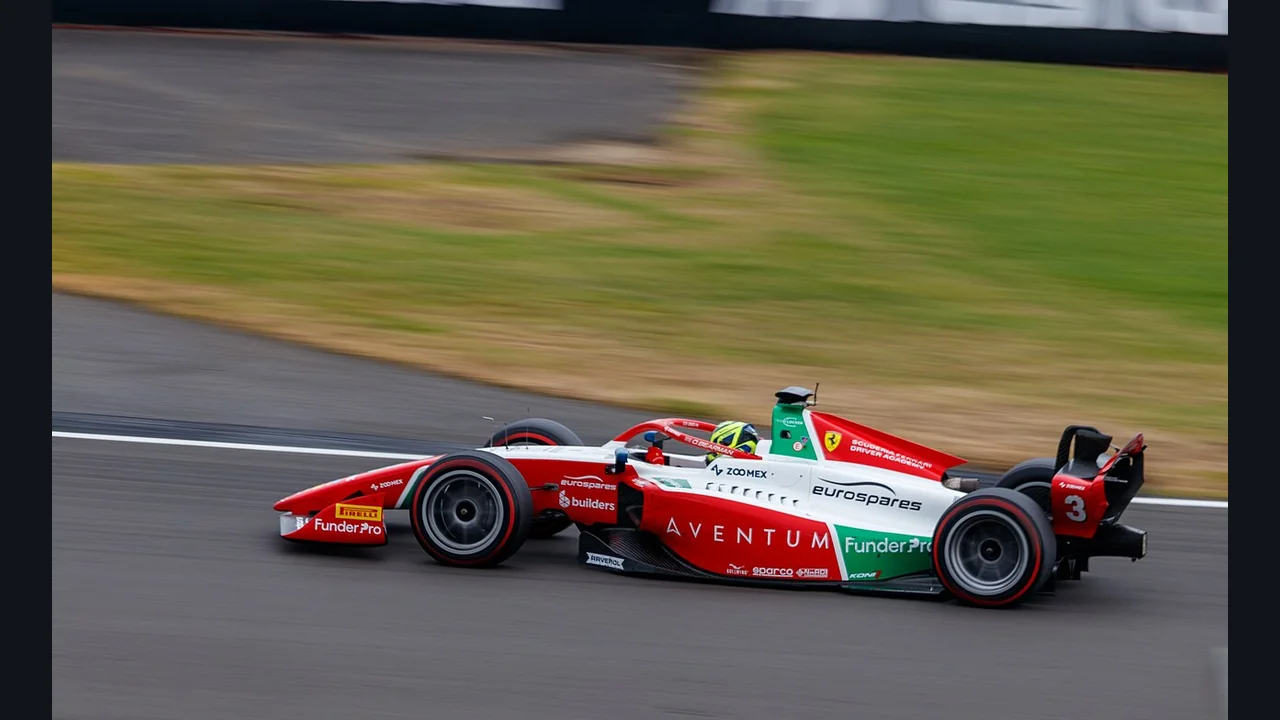
Does the pace repeat after the opening laps? Is time lost on entry, mid-corner or exit? Could traffic or changing conditions explain the variation? These questions organise observation without replacing telemetry. One lap time alone cannot establish tyre temperature as the cause of a slowdown. The photograph shows Goethe at the Melbourne Walk on 7 March 2026, rather than during the interview.