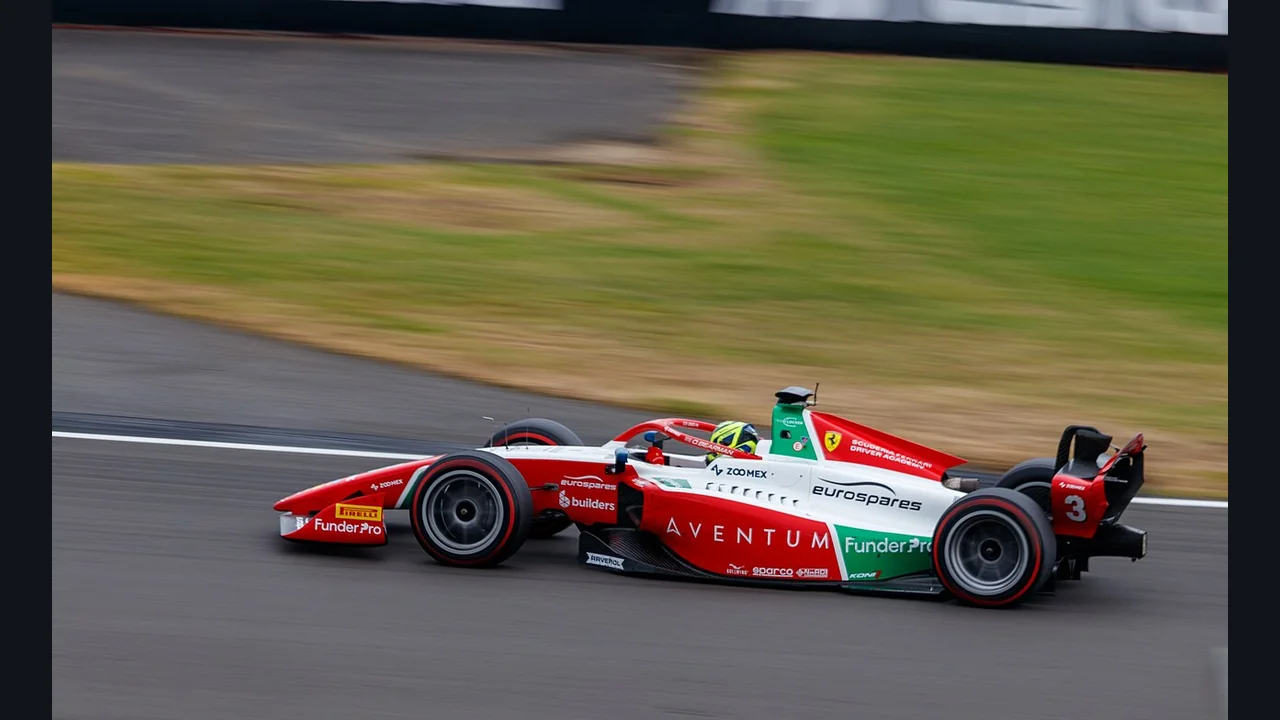
A championship that demanded more than a fast lap
Charles Leclerc has revisited his Formula 2 experience in an interview published by the championship for its anniversary series marking ten seasons of the modern competition. The Ferrari driver identifies pit stops and strategy as important lessons before his move into Formula 1. It is a perspective on a driver’s development, offered by the 2017 champion after years of experience at the next level.
Seven victories and seven pole positions with PREMA
F2’s official Hall of Fame records a rookie campaign that ended with Leclerc winning the title for PREMA Racing. He took seven race victories and seven pole positions, finishing 72 points ahead of Artem Markelov. Those figures establish the scale of his 2017 season. They also provide the context for the interview: Leclerc is reflecting on a year in which speed, results and the accumulation of experience progressed together, rather than describing an isolated breakthrough performance.
| Measure | Result |
|---|---|
| Team | PREMA Racing |
| Classification | Champion |
| Wins | 7 |
| Pole positions | 7 |
| Final margin over Markelov | 72 points |
Abu Dhabi remains his chosen victory
The race he selects in the interview is his final Formula 2 Sprint at Yas Marina. The official 2017 report describes Leclerc working through the field before passing Alexander Albon on the last lap and winning ahead of him and Nicholas Latifi. The championship had already been settled. This victory was therefore the closing act of a title-winning season, rather than the moment at which he became champion, a distinction that matters when revisiting his career.

How to interpret the lesson about strategy
Leclerc’s experience highlights the importance of how a driver distributes effort across a race. A quick lap offers one measure of speed, but a race requires repeated decisions: when to attack, how long to remain close to another car and which information to relay to the team. F2 exposes drivers to those questions in a competitive environment. It cannot automatically produce a future Formula 1 champion, but it can provide experiences that a qualifying result alone will not capture.
The team and confidence belong to the same story
Leclerc also recalls his relationship with Antonio Fuoco, his team-mate that year, who became a close friend. The detail moves attention from the numbers to the environment in which they were achieved. For readers following the current generation, it suggests another useful area to watch: how a driver learns and works with the people around them, alongside their finishing position. The interview does not provide a recipe that guarantees a Formula 1 seat; it gives a personal account of one driver’s preparation.
What the first champion of the modern series means
The FIA Formula 2 Championship launched in 2017 as the successor to the GP2 Series. Leclerc is the first champion of that modern competition; this description does not erase the older history of the Formula 2 name. Seen in that context, the anniversary interview connects the beginning of an era with questions that remain relevant today: how racing judgement develops and how potential becomes repeatable results. The 2017 record and his present-day explanation help readers understand that process.