
Singapore changes a historical ranking
Max Verstappen's Singapore victory brought him to 73 Grand Prix wins for Red Bull, according to Formula 1's review published on October 16, 2026. The partnership moves ahead of Michael Schumacher and Ferrari, who recorded 72, into second place. Lewis Hamilton and Mercedes remain the reference at 84. This is a ranking of individual driver–team partnerships, checked at a defined point in time, rather than a table combining every victory in a driver's career.
Why this differs from career wins
A driver can win for several constructors. Each association is counted separately in this comparison. Hamilton's McLaren and Ferrari victories do not join his Mercedes total, just as Schumacher's Benetton results remain separate from those achieved with Ferrari. APEX interpretation: the unit of measurement follows the continuity of a sporting project. It does not produce a universal verdict on the greatest driver in Formula 1 history, and should not be presented as one.
Eleven victories to draw level
The arithmetic gap between 84 and 73 is eleven victories. Going beyond the leading total would require twelve. That calculation describes a distance, rather than a deadline for reaching it. Neither the number of remaining races nor performance over two weekends can be converted into a promise. Reliability, rival performance and car development remain variables, and a successful sequence cannot guarantee the next race result.
A partnership built over time
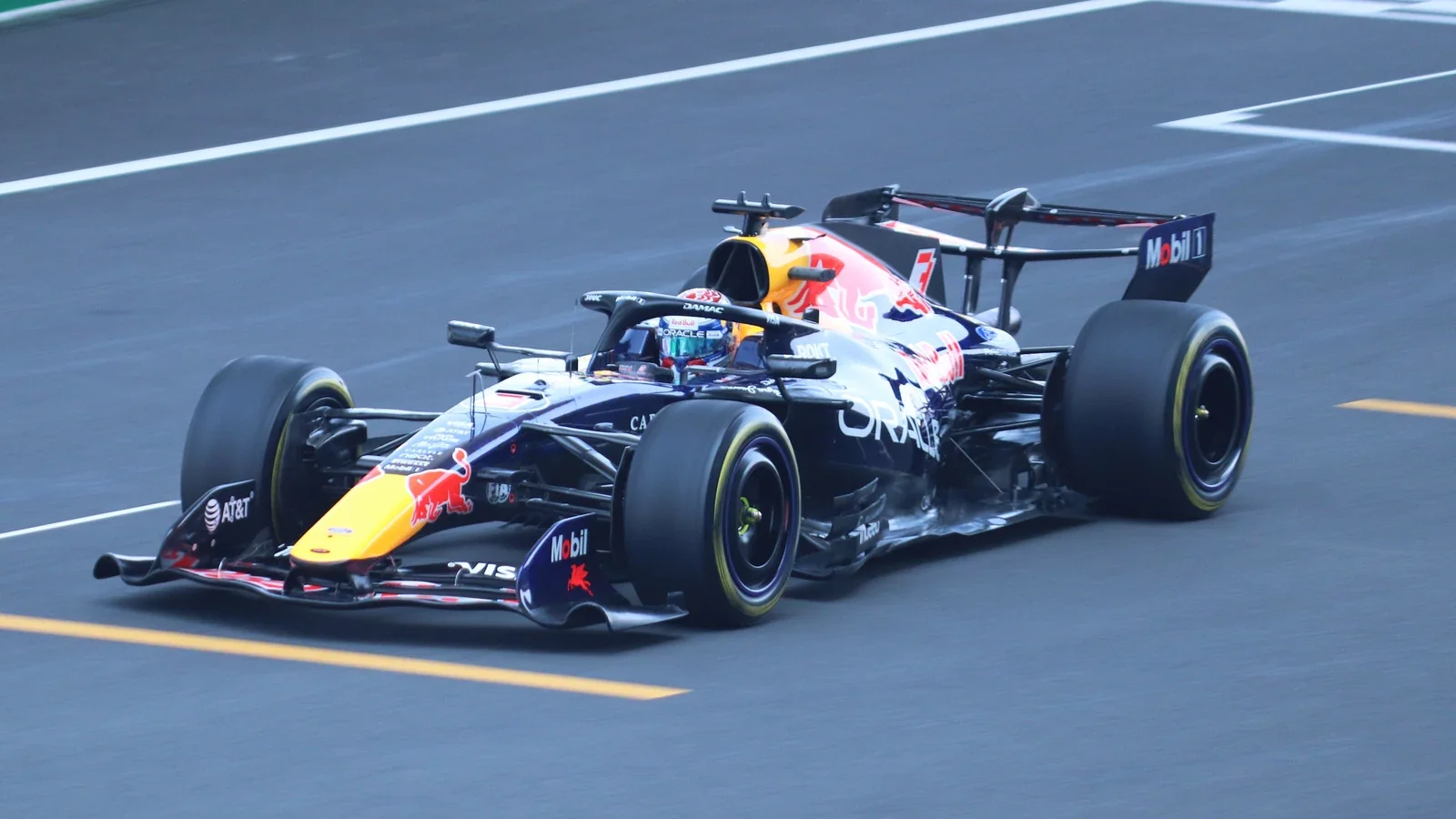
Verstappen's first Red Bull victory arrived on his debut for the team at the 2016 Spanish Grand Prix. The team's official profile recalls that beginning and the world titles that followed from 2021 through 2024. This article's photograph shows him in China in March 2026. It provides visual context for the current partnership and does not claim to capture the Singapore victory or the moment a statistical milestone was reached.
How to compare eras fairly
APEX analysis: an absolute total needs context. Season lengths, the duration of a partnership and the opportunities provided by a car vary between generations. A win percentage can offer another perspective, but requires a verified denominator: starts for that particular partnership, rather than every start in the driver's career. Without the complete underlying dataset, an apparently precise percentage would obscure the comparison instead of clarifying it for readers.
What the milestone preserves
Records become useful when they illuminate collaboration: how drivers, engineers and organisations reproduce performance over time. Singapore changes a position in a table without erasing earlier generations' achievements. This assessment is closed at October 16, 2026. Any subsequent victory requires an explicit update to the total, rather than silently changing the historical date of the comparison. Read the number alongside its category, source and verification date.


